
Many shopping centres are in financial trouble and in danger of closure. Warehouse space is in short supply, so one solution for landlords is to convert shopping centres to warehouses.
A number of retail chains including Toys R Us, Maplin, HMV and Debenhams have either gone out of business or are in financial difficulties. The United States has similar issues. Since 2016, 24 retail-to-warehouse conversions have turned 7.9 million square feet of existing retail units into warehouses. There have also been a few shopping ‘malls’ there that have been totally demolished and replaced with new warehouses.
The areas where this has happened in the USA are mainly ones whose population has a lower than average household income who can no longer support local retailers.
Compared to the total number of new warehouse spaces, retail conversions are a small but a growing proportion. This trend could be copied in Britain. Many UK shopping centres are near large population areas or close to motorways which are ideal locations for warehouses operated by online retailers.
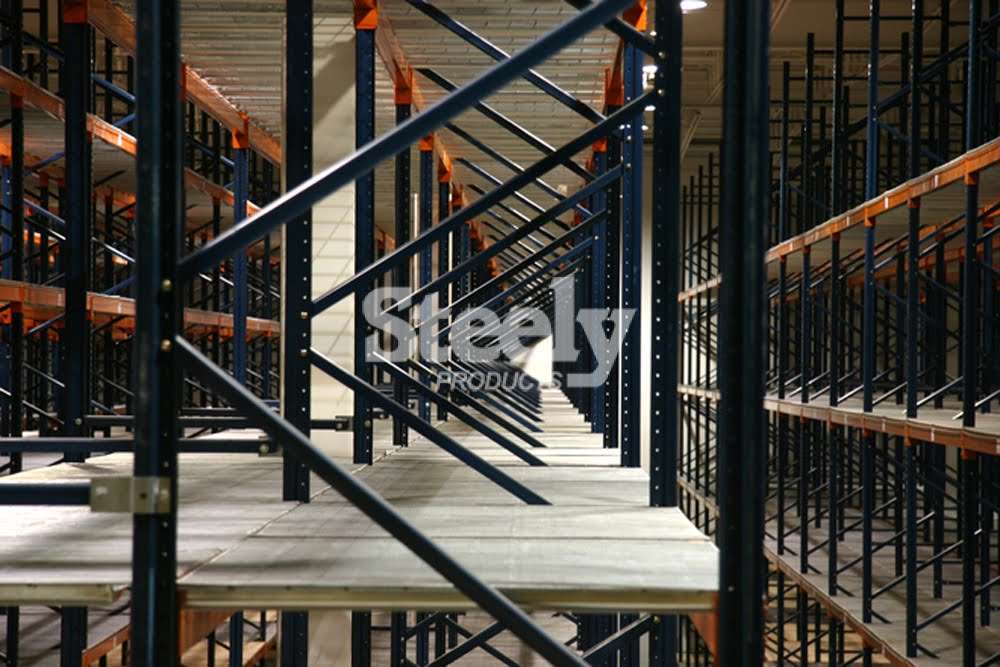
Any change of use normally needs planning permission and after conversion warehouse storage racks and handling equipment needs to be installed.
The high demand for warehouse storage is fuelled by the rise in online shopping. There has also been demand from businesses stockpiling goods in case of short supplies in case there is a no deal Brexit, though this could be a temporary situation, resolved after Britain leaves the European Union.
Many shopping centres are in financial trouble and in danger of closure. Warehouse space is in short supply, so one solution for landlords to continue to receive rent is to convert shopping centres to warehouses.
A number of retail chains including Toys R Us, Maplin, HMV and Debenhams have either gone out of business or are in financial difficulties. The United States has similar issues. Since 2016, 24 retail-to-warehouse conversions have turned 7.9 million square feet of existing retail units into warehouses. There have also been a few shopping ‘malls’ there that have been totally demolished and replaced with new warehouses.
The areas where this has happened in the USA are mainly ones whose population has a lower than average household income who can no longer support local retailers.
Compared to the total number of new warehouse spaces, retail conversions are a small but a growing proportion. This trend could be copied in Britain. Many UK shopping centres are near large population areas or close to motorways which are ideal locations for warehouses operated by online retailers.
Any change of use normally needs planning permission and after conversion warehouse storage racks and handling equipment needs to be installed.
The high demand for warehouse storage is fuelled by the rise in online shopping. There has also been demand from businesses stockpiling goods in case of short supplies in case there is a no deal Brexit, though this could be a temporary situation, resolved after Britain leaves the European Union.
You may also interested in:

Why packaging sometimes fails during deliveries
Every year, millions of items leave warehouses in pristine condition, but arrive damaged due to
Why digital warehouses often come with unexpectedly high costs
Warehouse owners are investing heavily in digitalisation and advanced stock management to