
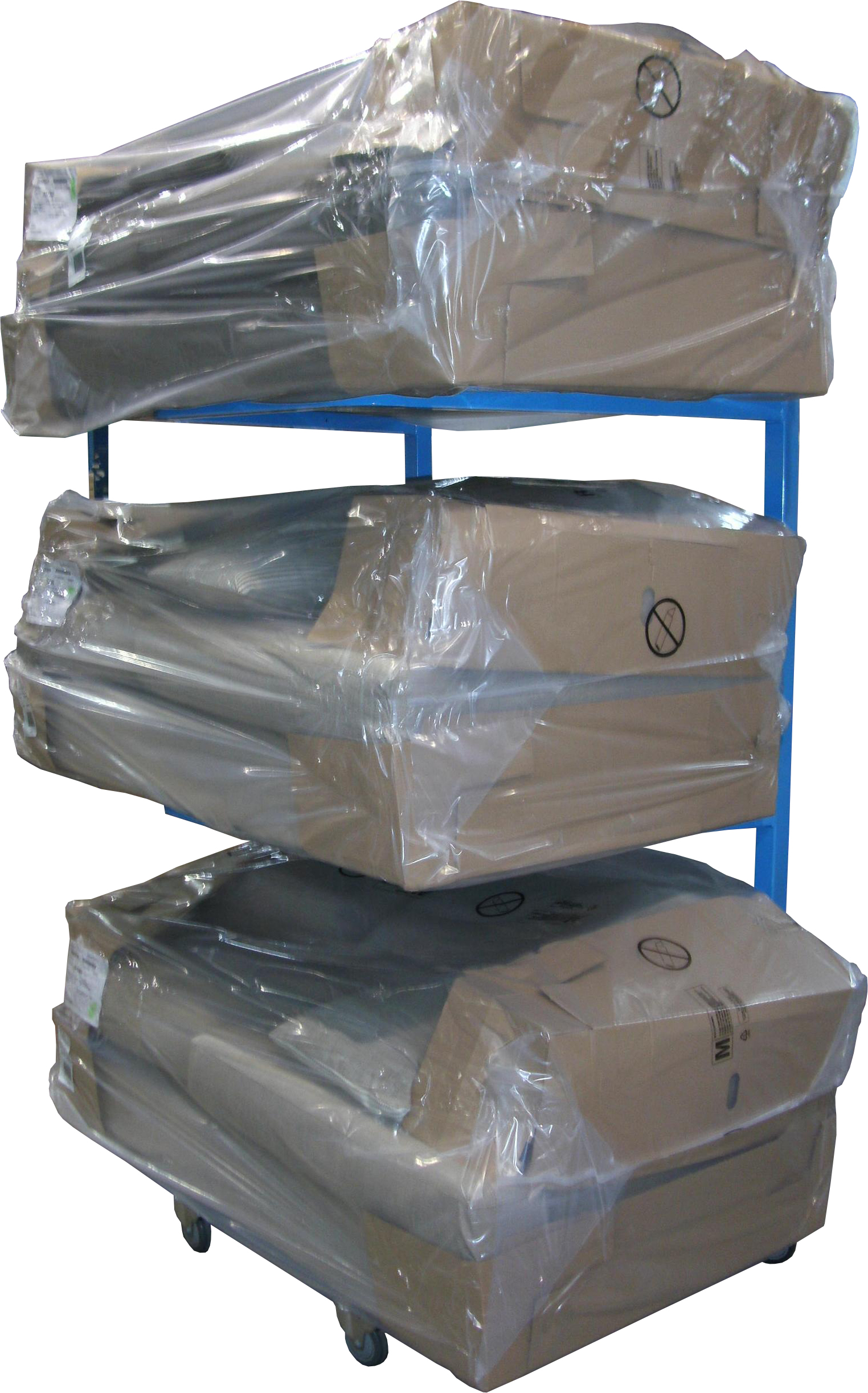
The primary purpose of stretch wrappers is to unitise loads, preventing items from shifting or falling during transit while protecting them from dust, moisture and tampering. They have been used for decades, but wrapper technology has evolved.
Traditional stretch wrapping film comes in 60 or 80 gauge, but modern film is thinner. Film at about 40 gauge is made stronger and holds better with less material.
The equipment that wraps the film has also changed. The film on these machines lasts longer, allowing more loads to be wrapped before the machine has to be refilled with new film.
Modern wrapping machines are also safer and faster. These machines are easy to maintain and more reliable, which reduces downtime. They are easier to repair and can be accessed without ladders. Onboard diagnostics provide real-time insights into performance and faults that need fixing.
Wrapping film is available that is made from more sustainable materials. To reduce landfill use, films are being developed that are compostable.
If logos, artwork or text are printed on standard film, they are distorted when the film is stretched. Stretch hood systems have a sealed, unstretched film layer on top of a stretched one. This means that colours or artwork can be printed on it without distortion. For instance, text can be printed on the film that identifies the load.
A warehouse trolley manufacturer can supply equipment that is designed to safely and easily move loads that are made stable and secure with stretch wrap.
You may also interested in:

Government intends to acquire UK steel firm
Jonathan Reynolds, the Business Secretary, has announced that the government intends to
UK startup using AI to improve steel production
A UK start-up, MatAlytics, has been awarded a £619,000 grant from Innovate UK to develop AI systems that make