

With an understanding that every business has different items it needs to store, access, retrieve and relocate, many types of shelving unit are available to order. Offered in various shapes, sizes and styles, they are typically made from hardwearing materials like steel and timber so they can supply an extended active service life and ensure goods stored remain secure and in perfect condition.
Two different shelving choices are static shelving and mobile shelving. Here, we define these options and discuss their main differences. We’ll also look at the applications they are best suited to. Read on to discover which option is best for your business or whether harnessing the benefits of both on site is a worthwhile solution.
What is static shelving?
Sometimes referred to as “roller racking”, static shelving consists, as its name suggests, of shelving units engineered to remain fixed in one place. Static shelving can take many forms, ranging from heavy-duty warehouse pallet racking to lightweight shelving for smaller products.
Static shelving systems typically consist of wall units, double-sided gondolas and single-sided shelving units. Shelving units, in turn, can include either permanent shelves or adjustable shelves that can be reconfigured to meet changing usage.
What is mobile shelving?
In contrast, mobile shelving is mounted on a mobile base. These shelving units are designed to smoothly and effortlessly move on metal tracks and avoid wasting the aisle space required by traditional-style static shelving systems. If a user requires access to stored goods, they can simply open an aisle beside the specific row they need.
Key differences between static shelving and mobile shelving
Static shelving offers inferior space efficiency compared to mobile shelving. As a permanent aisle is required between each row so staff can access stored inventory, around 70% of floor space is wasted. Mobile shelving, on the other hand, eradicates the need for walkways, effectively increasing storage capacity on site by 50% to 100%.
Static shelving has a much lower upfront purchase price and installation cost due to its simple design. Mobile shelving is significantly more expensive from the outset, as costs involve carriages, tracks and installation. However, the additional space it supplies can save companies money over the long term as it avoids the need for investment in building extensions.
Static shelving is not without benefits, however. Its configuration lets multiple operators access several different aisles simultaneously. Due to its design, mobile shelving only allows users to open a single aisle at any one time. This can cause a lag in productivity at high-traffic sites.
The basic design of static shelving consists of solid metal frames and durable shelves for stock. As such, it requires next to no maintenance to stay in optimal condition. Mobile systems, on the other hand, work using powered or mechanical moving components, tracks and wheels that require periodic servicing to stay working effectively.
When should you select static and mobile shelving?
As you can see, both static and mobile shelving units have their own advantages. To find the best option for your firm, consider your budget, what you are storing and how often you access it.
Static shelving is considered the best option for sites where high-frequency order picking occurs. Warehouses with large teams of pickers who simultaneously need constant access to goods are a strong example. Static shelving systems are also an excellent choice for firms that initially have a restricted budget to work with due to their low outlay.
Mobile shelving is an outstanding solution when working with a storage facility with a limited footprint and helps maximise available space. However, due to the limitations they put on access, mobile shelving systems are better suited to storing items that require retrieval less frequently, such as archived files, seasonal stock and spare parts.
If you require custom storage solutions that perfectly fit your site, your processes and the stock your site holds, we at Steely Products can help. Connect with us now to find out more about the shelving options we design.
You may also interested in:
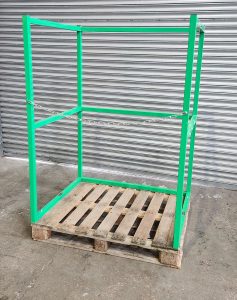
What is a stillage?
Extremely robust and mainly manufactured from strong metals like steel, a stillage is a multi-purpose container. Often cage-like in appearance, stillages are employed for
Crew Clothing expands its AI-powered task management system
Clothing retailer Crew Clothing has announced that it is extending its